


In FTTH deployments, a project’s success does not end when the civil works are completed or when the network has been installed in the field. In many cases, the true technical closure takes place during the project validation and acceptance process. This is precisely where As-Built documentation plays a decisive role.
An infrastructure may have been correctly constructed, but if the final documentation does not accurately reflect the reality of the deployed network, issues begin to arise that directly affect project closure. Rejected deliverables, delays in certification, GIS validation problems, maintenance difficulties and technical redesigns are some of the most common consequences.
As-Built documentation should not be regarded as an administrative formality carried out after construction. It is the definitive technical representation of the infrastructure as actually built. It records the actual routes, the infrastructure occupancy used, the completed splices, the available spare capacity and all modifications made during the works compared with the original design.
In FTTH projects, even minor changes made in the field can have a significant impact on network traceability. Changes to duct routes, the reuse of existing infrastructure, route adjustments or issues resolved during construction must be properly documented to ensure consistency between the physical network and its associated management systems.
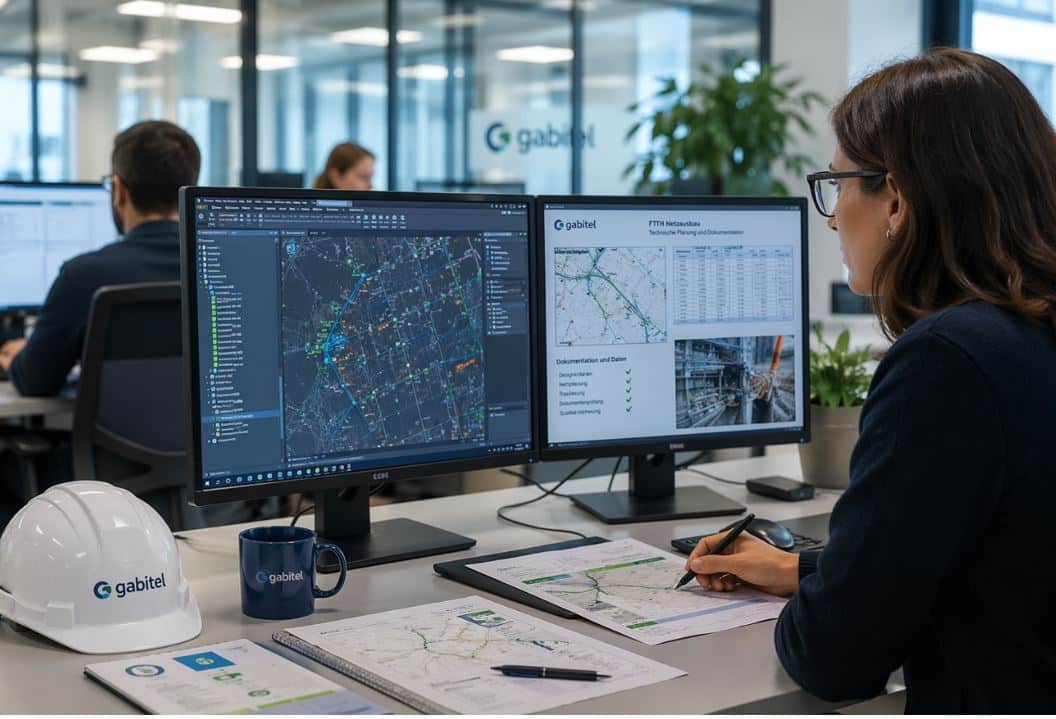
In addition, the market is progressively raising the documentary quality standards required for this type of project. Operators and public authorities increasingly demand greater accuracy in GIS validations, consistency between drawings and databases, standardised documentation structures and compatibility with operation and maintenance platforms. This requires the use of much more integrated and rigorous methodologies throughout the entire project lifecycle.
For this reason, the quality of As-Built documentation no longer depends solely on the documentary work carried out at the end of construction. It is the result of continuous coordination between engineering, supervision, field teams, GIS specialists and quality control departments. Each area actively contributes to producing reliable and consistent documentation that accurately reflects the deployed infrastructure.
When this process is carried out correctly, the benefits are clear. Project acceptance is accelerated, subsequent issues are reduced and the future maintenance of the network is significantly improved. In addition, accurate documentation builds client confidence and ensures much more efficient long-term technical traceability.
In many FTTH deployments, the difference between a problematic project closure and an efficient operational handover lies not only in how the works were executed, but also in how the completed network was ultimately documented.